January. That's the answer nobody wants. If you're reading this in the middle of a gray, post-holiday slump with a "For Sale" sign that's starting to look permanent, you already suspect it: the calendar is working against you. I've watched this play out more times than I can count on my own listings, and the pattern is brutal. The same house that sat untouched for six weeks in January got three offers in ten days when we re-listed it in early April — same price, better staging.
So when people ask me how to stage your home to sell fast, I don't start with throw pillows. I start with the calendar, then work backward. Timing sets the ceiling on your speed. Staging determines whether you actually reach it.
Key takeaways
- Staging does not magically raise your price — it compresses your timeline by making buyers commit sooner.
- The first 10 days on the market drive the most traffic you will ever get. Stage before you list, not after.
- Empty rooms read smaller than furnished ones. Vacant homes are the single biggest staging mistake I see.
- You can stage a lived-in home without moving out. It costs discipline, not necessarily money.
- January and December are the slowest months most years. If speed is the goal, avoid listing then.
Why staging your home to sell fast is a timing problem before it's a decor problem
Here's what most advice skips. A buyer walking through your house is not evaluating the house. They're evaluating a future life. Staging just makes that future legible. Remove the noise — the family photos, the cluttered counters, the room that could be an office or a junk drawer — and the buyer stops guessing and starts picturing their own couch against your wall.
That mental shift is what produces the offer. Not the vase.
Does staging a home make it sell faster?
Yes, and the mechanism is worth understanding because it changes what you prioritize. A staged home photographs better, and in 2026 almost every buyer's first walkthrough happens on a screen. If your listing photos are dark, cluttered, or shot in a room with no clear purpose, that buyer never books a showing. You lose them before they ever stand in your hallway.
The faster sale doesn't come from a higher price. It comes from more qualified buyers showing up in the first two weeks. More eyeballs, more competition, faster decision.
What is the 3-3-3 rule in real estate?
You'll hear this thrown around a lot, and honestly the definition drifts depending on who's talking. The version I use with clients is this: the first 3 showings, within the first 3 weeks, tell you whether your price and staging are working. That's it. It's not a magic formula — it's a diagnostic.
If those first three showings produce feedback like "loved it but the price" or "beautiful, just not for us," your presentation is fine and your price is the issue. If they produce "it felt small" or "I couldn't tell what this room was for," your staging is the problem, not your number. I've used this filter for years and it has saved me from talking sellers into pointless price cuts when the real fix was a coat of paint and a rented sofa.
Some people apply "3-3-3" to days, or to a percentage. Don't get hung up on the exact reading. Use it as a checkpoint: three weeks, three real showings, three honest pieces of feedback.
What actually helps a house sell quickly
Speed comes from removing friction. Every hesitation a buyer feels is friction, and friction is what makes a house sit. So the question isn't "what looks nice" — it's "what is making people pause?"
When I staged my own place before selling, I did the classic thing and spent a full weekend on decor. Wrong order. The two changes that actually mattered were boring: I fixed the lighting and I cleared the entryway completely. The showing feedback flipped from "a bit dark" to "feels bright and open." Same house.
The high-impact zones you should hit first
- Entryway — clear it to almost nothing. A bench, one plant, a mirror. Nothing else.
- Living room — pull furniture off the walls and create one clear conversation area. Floating furniture makes rooms feel larger.
- Kitchen counters — leave one small item. A bowl, a cutting board. Not the coffee maker, the toaster, the knife block, and the mail.
- Primary bedroom — neutral bedding, no laundry, and make the bed like a hotel every single morning.
- Curb appeal — this is the first photo and the last impression. A clean walkway beats a fancy garden every time.
- Undefined rooms — give them one job. A dining room, an office, a reading nook. Never "storage."
The three pillars: declutter, depersonalize, deep clean
I know. You've read this everywhere. But the reason it's everywhere is that it works, and the reason most people fail at it is that they do a light version and call it done. Decluttering is not tidying. It means removing roughly a third of what's on your surfaces and in your closets, then storing it off-site — not shoving it in the garage, where buyers will open the door and see the mountain.
Depersonalizing means the family photos come down. All of them. Yes, even the hallway ones. You want buyers to see themselves, and every personal object is a reminder that this is someone else's home.
Deep clean means baseboards, light fixtures, vents, and windows. In my experience the single most overlooked item is the smell. You go nose-blind to your own house in about ten minutes. Bring in someone who doesn't live there and ask them, honestly, what it smells like.
How to stage a house for sale with no money
Money helps, but it's not the deciding factor. I've seen a fully furnished $8,000 staging package get beaten by a homeowner who spent a Saturday rearranging furniture and borrowed a few things.
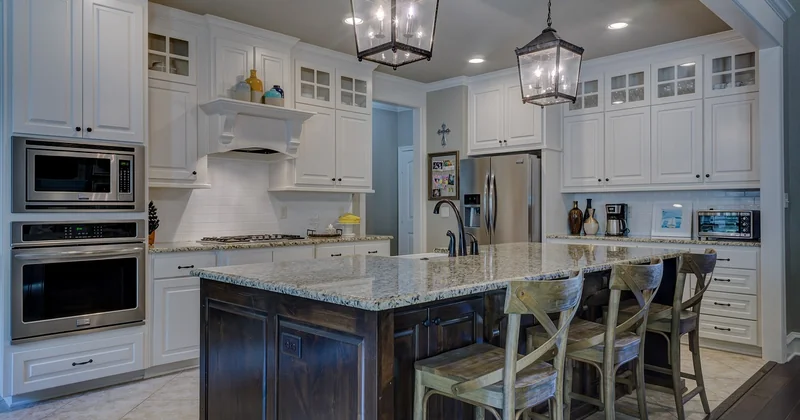
Here's what you can genuinely do for free or close to it:
- Remove furniture until each room feels a little too empty. You'll almost never regret taking something out.
- Rehang curtains higher and wider than the window. It makes ceilings feel taller and costs nothing if you already own a drill.
- Swap your own art for the most neutral pieces you own, or borrow from a friend.
- Open every blind, replace every burned-out bulb with the brightest one you have, and turn all lights on before a showing.
- Borrow plants. A single healthy plant in a dull corner does more work than most decor.
The catch? Free staging takes time, and time is the thing you're trying to save. If your market is slow, that trade is fine. If you're listing next week, spend the money.
| Approach | Typical cost | Time to set up | Best for |
|---|---|---|---|
| DIY rearrange & declutter | Near zero | One weekend | Already-decent homes, flexible timeline |
| Partial staging (key rooms) | Moderate, rented pieces | A few days | Most occupied homes |
| Full staging service | Highest | One to two weeks | Vacant homes, luxury listings |
| Virtual staging (photos only) | Low | 2–3 days | Empty homes with weak listing photos |
Staging a home to sell while living in it
This is the version nobody warns you about. You can't actually live in a staged house — staged houses are meant to look like nobody lives there, and you do. So you're running a daily routine where every surface gets wiped, every dish gets put away, and every personal item disappears before you leave for work.
It's exhausting. I did it for seven weeks once and I will not pretend it was pleasant. But it works, and here's how to survive it:
- Keep one "staging bin" per room. Everything that lives on a counter goes into the bin before a showing and comes back out after.
- Do a five-minute reset every single night. Not a deep clean. A reset. Dishes, surfaces, thrown cushions.
- Keep showing supplies in a single drawer: a lint roller, a clean towel, a neutral-scented candle you never light, and a bin for anything that needs to disappear.
- Set a rule with your household — no new objects on any horizontal surface. That means mail, shoes, bags, receipts. All of it goes in a basket, immediately.
- Clear the bathroom completely. Toothbrushes, hair products, everything into a drawer.
Sound like a lot? It is. But the alternative is a house that sits, and a house that sits costs you more than a few weeks of discipline.
What is the hardest month to sell a house?
For most markets, January is the toughest, with December close behind. The reasons are practical: buyers are recovering from the holidays, budgets are tight, and the pool of active shoppers shrinks. Spring — roughly March through June — consistently brings the most traffic, which is exactly why staging matters most when you're listing outside that window.
If you have to sell in a slow month, lean harder on presentation. The buyers who are out in January are serious. A staged home wins their attention far more easily than it would in a crowded spring market, simply because there's less competition for their eyes.
Before and after: what changes actually move the needle
I keep before-and-after photos on my phone, and I'll be honest — the transformations look dramatic in a way that undersells how simple the changes were. The most common before: a dark living room with the sofa pushed against the wall, three throw blankets on it, and a coffee table covered in objects. The after: same sofa, pulled forward, one throw, one book, one candle, and the rug repositioned to anchor the seating.
Almost nothing was bought. It was rearranged.
That's the part people miss when they scroll through ideal staging photos online. You're not seeing expensive rooms. You're seeing rooms where someone made hard decisions about what to remove. A buyer doesn't notice what you added. They notice when a room feels calm, clear, and big enough for their life.
If you take one thing from all of this: stage for the buyer's imagination, not for your taste. Your taste is why the house looks like yours — and you're trying to make it stop looking like yours. It's a strange job, but it's the whole job. The moment you accept that, the rest is just logistics.